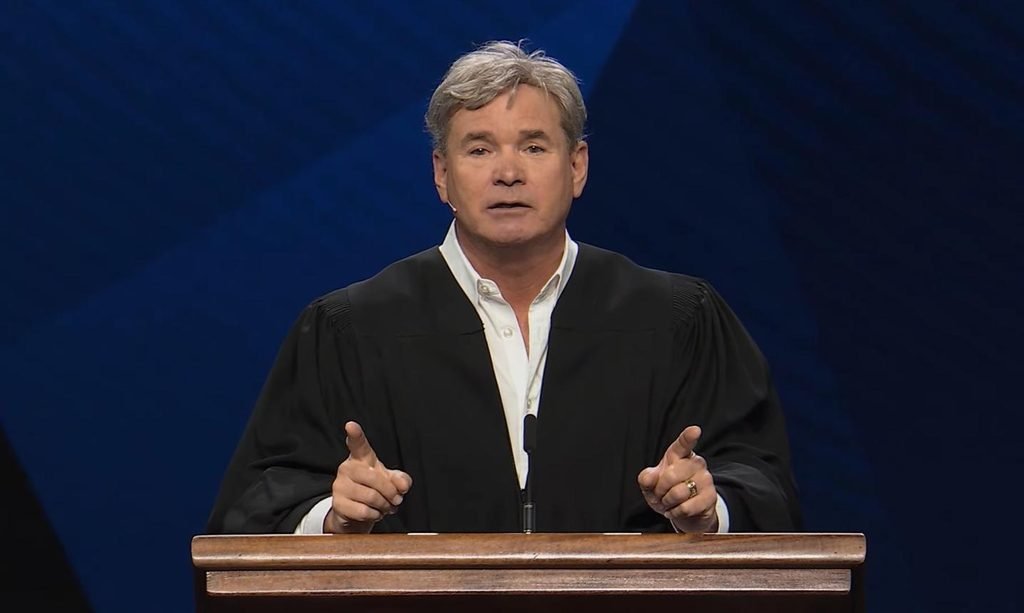
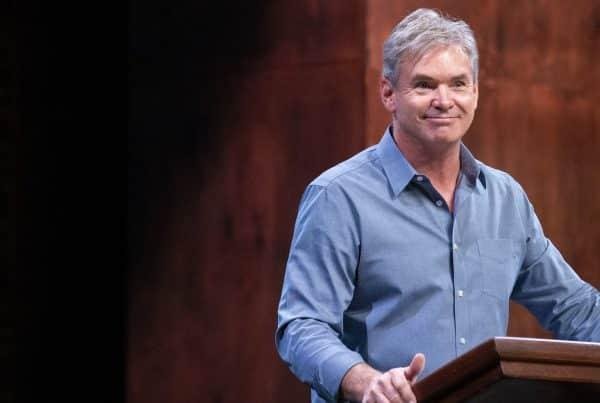
Pastor Jack Hibbs, founder and senior pastor of Calvary Chapel Chino Hills, has become the subject of national attention following remarks about Muslim Americans in public office.
A sermon delivered by California pastor Jack Hibbs has triggered a growing debate across religious and political circles in the United States. The controversy began after Hibbs spoke about the results of the November 2026 midterm elections and expressed concern about the increasing number of Muslim Americans serving in elected positions.
His remarks quickly attracted attention online. Clips from his message circulated across social media, reaching audiences far beyond the congregation that originally heard the sermon. Supporters described his comments as a warning about America’s political and religious direction, while critics argued that his statements unfairly questioned the loyalty and constitutional rights of Muslim Americans.
The disagreement has placed Hibbs, a prominent evangelical pastor with a large media following, in the middle of a national conversation about faith, politics, religious freedom and the responsibilities of public leaders.
The controversy is particularly significant because Hibbs is not a little-known religious figure. He leads Calvary Chapel Chino Hills, a large Southern California congregation that began as a small home Bible study and eventually developed into an influential Christian ministry with a substantial online audience.
For people who have followed his ministry for years, the recent developments raise questions about the relationship between his religious leadership and his increasingly visible political commentary.
But what exactly happened? What did Hibbs say, why did his remarks attract such a strong response, and what does the controversy mean for the future of his church?
Here is a closer look at the events, the facts behind the claims and the ministry that has made Jack Hibbs a recognizable name in American evangelical Christianity.
1. The November 2026 Sermon That Started The Controversy
The controversy intensified following the November 3, 2026, American midterm elections.
In the days following the election, Hibbs addressed his congregation and discussed what he considered a troubling political development. His message focused on the number of Muslim Americans serving in public office and the implications he believed this could have for the country’s political and constitutional identity.
During the sermon, Hibbs described the election outcome as a turning point for the United States. He argued that Christians who did not participate in the election had contributed to the result.
One of the most widely circulated statements from the sermon was his declaration that the republic had effectively ended.
He also referenced a figure of 255 Muslim elected officials and claimed that these officials could not swear allegiance to the United States Constitution because of their religious beliefs.
The comments immediately attracted attention because they involved a broad statement about an entire religious community.
A short video of the remarks began spreading on social media, where viewers shared, criticized and debated the pastor’s message.
According to reporting by 567politics, Hibbs published a 2-minute-and-24-second version of the clip on his X account on November 10, under the caption “The Republic is over.” The report documented more than 125,000 views by the following Wednesday morning. 567politics+1
The video became a major talking point among political commentators, evangelical Christians and critics of the pastor.
What made the story especially significant was that the debate was no longer limited to the election results. It had become a broader argument about whether religious identity should influence how Americans judge the political participation of their fellow citizens.
2. Why Jack Hibbs’ Remarks Sparked Such Strong Reactions
Jack Hibbs lists 5 things Christians will go to war over in 2024 | Church & Ministries
The central issue was not simply that Hibbs discussed politics from the pulpit. American pastors have a long history of discussing elections, public policy, religious freedom and moral questions with their congregations.
Instead, the strongest criticism focused on the way his comments connected Muslim religious identity with an alleged inability to support the American Constitution.
Critics argued that such statements unfairly treated Muslim Americans as a single group with identical political beliefs and loyalties.
The United States has a constitutional system that protects religious freedom and prohibits religious tests for public office. Article VI requires public officials to support the Constitution through an oath or affirmation, while also stating that no religious test can be required as a qualification for public office.
That distinction became an important part of the public debate.
Hibbs presented his concerns as a warning about the influence of religious ideology on American government. Critics responded that an individual’s faith does not automatically determine whether that person can fulfill constitutional responsibilities.
The controversy also attracted attention because the sermon connected Muslim elected officials with the September 11, 2001, terrorist attacks.
For many critics, that comparison crossed an important line by associating ordinary Muslim Americans participating in democracy with the actions of a terrorist organization.
Supporters of Hibbs, however, focused on his broader message about Christian participation in elections. They argued that churches should encourage members to vote and take an active role in public life.
These competing interpretations have helped the story spread.
Rather than being a simple disagreement over one sermon, the controversy has developed into a discussion about the responsibilities of religious leaders when they speak about political minorities.
3. The 255 Figure: What The Numbers Actually Show
One of the most important details in this story concerns the figure of 255.
Hibbs referred to 255 Muslim elected officials while discussing the November elections. However, subsequent reporting found that this number did not represent 255 Muslim candidates newly elected on November 3.
The figure came from a directory published by the Council on American-Islamic Relations (CAIR) and CAIR Action on August 20, 2026.
That directory identified 255 Muslim elected officials and judges already serving across 26 states.
The distinction matters because the directory was published before the November midterm elections.
According to the directory, the officials included:
- 98 city council members.
- 63 officials serving in education-related positions.
- 46 state legislators.
- 18 judges.
- 11 mayors.
- Four members of the U.S. House of Representatives.
- 15 officials serving in other elected positions.
These figures describe the existing representation of Muslim Americans in public office, not the number of people who won new positions on Election Day. cair.com+1
CAIR subsequently published preliminary election results on November 5.
Its report identified at least 97 confirmed Muslim electoral victories across federal, state and local races in 21 states. The organization also reported that 50 candidates had lost, 15 were leading in races that had not yet been called, and six contests remained too close to call.
CAIR expected the final number of victories to exceed 100 once all results were counted. cair.com
These are important distinctions for anyone trying to understand the controversy.
The 255 figure describes a directory of officials serving before the election. The 97 figure represents preliminary election victories reported after November 3.
Combining the two figures without explaining their different purposes can create a misleading impression of what happened.
The numbers also reveal something about the broader story: Muslim Americans participate in American government at many different levels, from local school boards and city councils to state legislatures and Congress.
Their participation has become a subject of political discussion, but the figures themselves do not establish that any elected official is unable to fulfill constitutional duties.
4. CAIR Responds To The Pastor’s Statements
How the FBI blacklisted US’ largest Muslim civil rights group | The Electronic Intifada
The remarks soon attracted a response from the Greater Los Angeles Area office of the Council on American-Islamic Relations.
On November 10, 2026, CAIR-LA released a statement condemning Hibbs’ comments.
The organization described the remarks as harmful and irresponsible, arguing that they questioned the ability of Muslim Americans to participate equally in the country’s political system.
Hussam Ayloush, executive director of CAIR-LA, said the statements contributed to an atmosphere of fear and suspicion toward Muslim communities.
The organization also argued that religious leaders should promote mutual respect and understanding rather than encourage distrust between religious communities.
CAIR’s response was significant because it brought an organized civil-rights perspective into a controversy that had initially spread through political commentary and social media.
The statement also highlighted the difference between criticizing a particular political ideology and questioning the constitutional rights of people because of their religion. CAIR California+1
The organization called on religious leaders from different backgrounds to encourage dialogue and reject rhetoric that could deepen divisions.
The response quickly became part of the wider news coverage.
For Hibbs, the criticism added another layer to the debate surrounding his public statements.
For CAIR, the issue was about protecting the ability of Muslim Americans to participate in public life without having their loyalty questioned simply because of their faith.
The disagreement reflects a much larger challenge facing American religious and political institutions: how to discuss difficult questions about religion and government while respecting the constitutional rights of every citizen.
5. What Does The U.S. Constitution Say About Religious Freedom?
The legal question is one of the most important parts of this story.
Article VI of the United States Constitution requires federal and state officials to support the Constitution through an oath or affirmation. It also specifically prohibits religious tests for public office.
This means that an American citizen cannot be disqualified from public office simply because that person is Muslim, Christian, Jewish, Hindu, Buddhist or belongs to another religious tradition.
The constitutional requirement concerns support for the Constitution, not membership in a particular religion.
This distinction is important when evaluating Hibbs’ statement that Muslim officials cannot swear allegiance to the Constitution.
A broad claim about the beliefs of an entire religious population cannot establish the intentions or constitutional commitments of individual officeholders.
Muslim Americans, like other citizens, hold different religious interpretations, political views and personal convictions.
The constitutional system evaluates public officials according to their legal obligations and conduct, rather than automatically assuming that their religious identity determines their loyalty.
There is also a separate question concerning the use of religious books during ceremonial swearing-in photographs.
Some elected officials choose to use a religious text for personal or ceremonial purposes. However, the official congressional oath does not require members to place their hands on a Bible or any other religious book.
For example, in 2007, Representative Keith Ellison used a Quran that had belonged to former President Thomas Jefferson during a ceremonial photograph associated with his congressional swearing-in.
That historical example demonstrates that the use of a Quran by a Muslim politician is not itself evidence of disloyalty to the United States.
The distinction between a constitutional oath and a personal religious ceremony is important in understanding this debate. 567politics+1
For viewers following the story, this is where the controversy moves beyond religious disagreement and into questions about American constitutional principles.
6. Who Is Pastor Jack Hibbs?
To understand why this controversy attracted so much attention, it is important to understand who Jack Hibbs is and how he built his ministry.
Jack Hibbs is an American evangelical pastor best known as the founding and senior pastor of Calvary Chapel Chino Hills in Southern California.
He is also the founder and president of Real Life ministry, a Christian media organization that distributes sermons, broadcasts, podcasts and other religious programming.
Hibbs is widely recognized for his energetic preaching style and verse-by-verse approach to biblical teaching.
His messages frequently address subjects including Christian faith, family life, biblical prophecy, cultural change, Israel, public morality and the relationship between Christianity and American society.
Over the years, his ministry has expanded beyond the walls of his local church.
Through television, radio, online video and social media, his teachings have reached audiences across the United States and internationally.
His official biography describes him as a nationally syndicated television and radio host whose ministry reaches audiences around the world. Real Life with Jack Hibbs+1
For many supporters, Hibbs represents a pastor who is willing to speak openly about issues they believe other church leaders avoid.
His critics, meanwhile, argue that his political commentary sometimes moves beyond religious teaching into statements that can divide communities.
This difference in perception is central to understanding his public image.
He is not simply a pastor whose sermons are watched by one congregation. He has developed a media presence that allows his statements to become part of national discussions almost immediately.
7. From Six People To A Major California Church
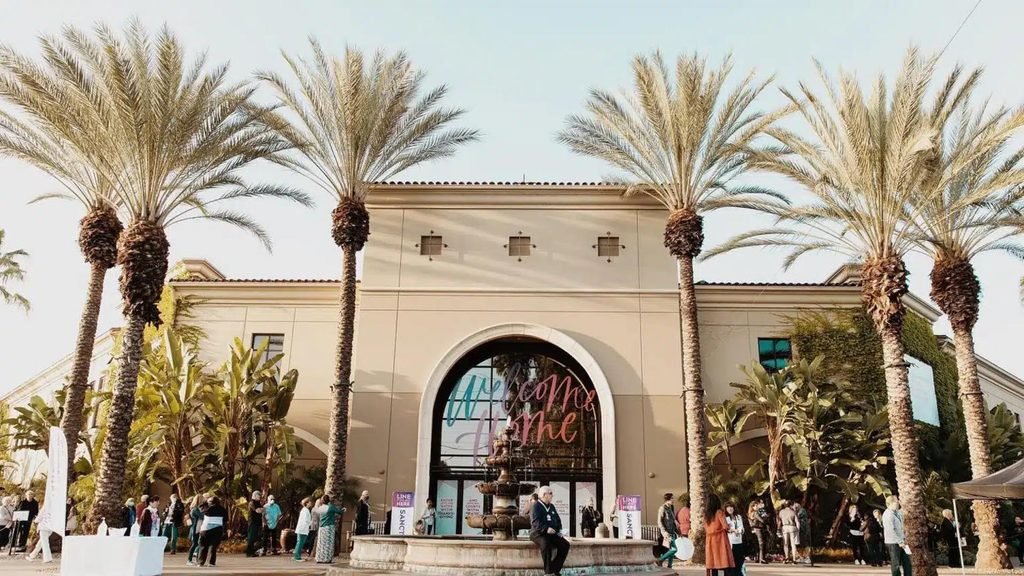
About – Calvary Chapel Chino Hills
The story of Calvary Chapel Chino Hills began much more modestly than its present-day size might suggest.
According to the church’s official history, the congregation started in August 1990 as a Monday-night home fellowship in Chino Hills, California.
Jack Hibbs and his wife, Lisa, helped establish the small gathering as a church plant connected with Calvary Chapel Costa Mesa.
At the beginning, only six people attended.
The meetings took place inside a private home belonging to Andrew, where furniture had to be moved every week to create space for additional chairs. As attendance increased, the growing fellowship used video equipment to allow people in other rooms to follow the service.
It was a small beginning, but the congregation continued to grow.
Eventually, the church moved into a rented industrial complex in Chino. Its attendance reportedly increased from approximately 100 adults to more than 2,000, excluding children and teenagers.
In 2000, the congregation purchased the property where its current campus stands.
The official church history says that more than 10,000 adults attend Sunday services, excluding children. Calvary Chapel Chino Hills+1
This growth represents a major transformation.
What started as a handful of people meeting in a home became a substantial Christian congregation with a permanent campus, media outreach and an international audience.
The church’s expansion also helps explain why Hibbs’ public statements attract attention.
When a pastor leads a small local fellowship, his comments may remain within a relatively limited community. When that pastor leads a large congregation and reaches viewers through television, radio and social platforms, the same comments can become national news.
The growth of Calvary Chapel Chino Hills has therefore made Hibbs an influential figure within certain sections of American evangelical Christianity.
His ministry’s success is an important part of the background to the current controversy.
8. Why Jack Hibbs Has Become Such A Recognizable Voice In American Christianity
Hibbs’ influence is connected to more than his position as a senior pastor.
He has developed a communication style that combines biblical teaching with commentary on current events.
Many of his sermons connect passages from Scripture to subjects that are already being discussed in American society.
His messages have addressed questions about national identity, religious freedom, family values, international affairs and the future of Christianity.
This approach has helped him build an audience that extends beyond regular churchgoers.
Some viewers watch his content because they are interested in biblical explanations of difficult subjects. Others follow his discussions of politics and culture.
The ministry’s official media platforms include television broadcasts, radio programming, podcasts, online sermons and social-media accounts. JH Media Kit+1
The Real Life ministry has also helped make his messages accessible to people who may never visit the church in person.
This is particularly important in an age when religious leaders can reach millions through digital platforms.
A sermon can be recorded on Sunday, edited into shorter clips and shared across multiple platforms within hours.
That process allows a local church message to become part of a national conversation.
The November controversy followed exactly this pattern.
A message delivered to a congregation was circulated online, shared by commentators and discussed by people who were not necessarily familiar with Hibbs or his church.
The result was a story that attracted attention from both religious and mainstream news outlets.
9. The Political Role Of Religious Leaders
The controversy has also reopened an older debate about whether pastors should become involved in political discussions.
In the United States, religious leaders have historically played a role in conversations about public policy and social issues.
Churches have supported civil-rights campaigns, spoken about poverty, encouraged voter participation and debated legislation affecting religious communities.
There is no single approach shared by every Christian congregation.
Some pastors prefer to keep political commentary outside their weekly services. Others believe that faith should influence how Christians understand public life and government.
Hibbs has become associated with the second approach.
His sermons often connect religious conviction with contemporary political issues.
Supporters see this as an expression of religious freedom and a responsibility to speak about issues they believe affect the country.
Critics argue that pastors must be especially careful when discussing religious minorities, because their words can influence how congregations view people outside their own faith.
The disagreement is not limited to conservative and liberal political groups.
Some conservative Christians also questioned parts of Hibbs’ message, particularly his comments about Christians who did not vote.
The 567politics report documented criticism from conservative commentators who agreed that Christians should participate in elections but objected to blaming nonvoters or suggesting violence against them. 567politics
This reaction is worth noting because it shows that the controversy does not divide neatly into two political camps.
People can support Christian political participation while disagreeing with a pastor’s specific language or factual claims.
For religious leaders, the challenge is finding a balance between speaking openly about political convictions and maintaining a commitment to accuracy, fairness and respect.
10. What Does The Controversy Mean For Calvary Chapel Chino Hills?
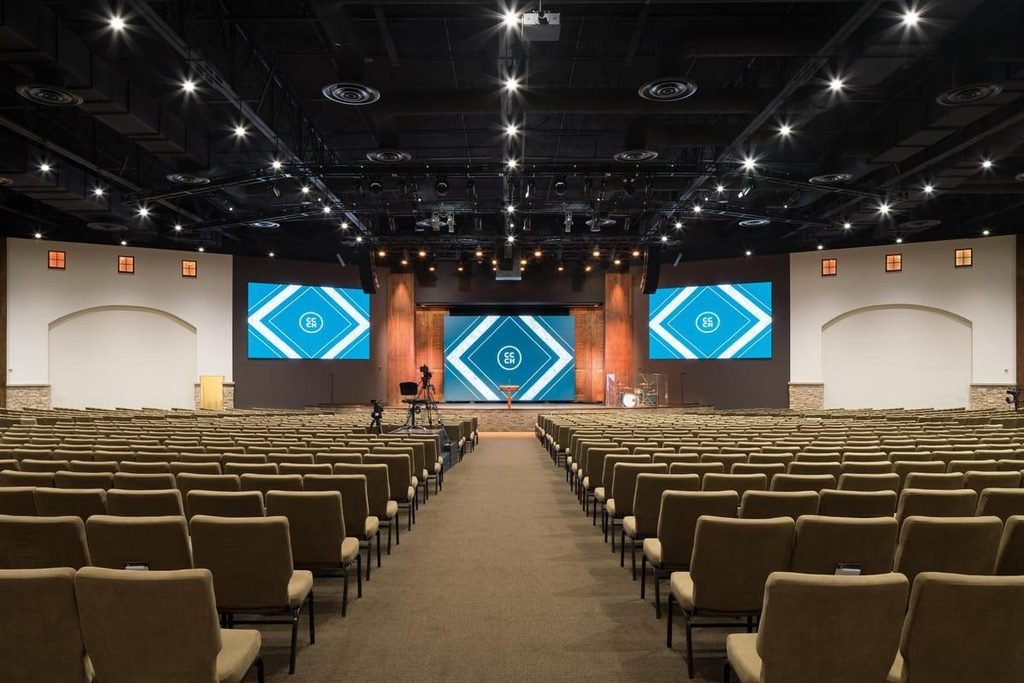
Calvary Chapel Chino Hills | TR Design Group, Architecture | Archinect
One of the most important questions concerns the church itself.
Calvary Chapel Chino Hills has spent decades building its reputation as a large evangelical congregation.
Its identity is closely connected with Hibbs because he helped establish the church and has served as its founding pastor.
That connection creates an interesting situation whenever the pastor becomes the subject of national criticism.
A controversy involving a church leader can affect how outsiders view the congregation, even when individual members have different opinions about the issue.
Some members may agree with their pastor’s political commentary. Others may prefer that church services focus more directly on biblical teaching and spiritual development.
There may also be people who attend because of the church’s worship, family ministries, Bible studies and community activities without following every political discussion.
It would therefore be inaccurate to assume that every member shares the same position.
At the time of writing, the recent reporting reviewed for this article does not establish that Calvary Chapel Chino Hills is facing a confirmed membership exodus, financial crisis or formal leadership transition because of the controversy.
There is also no verified announcement of Hibbs leaving his position as senior pastor.
The church’s official sermon archive continues to list his teaching and recent services. Its November 25, 2026, Thanksgiving Eve family service is among the latest entries. Calvary Chapel Chino Hills+1
That is an important distinction.
A viral controversy can create substantial attention without necessarily producing an institutional crisis.
The church’s long-term response, if any, will be more meaningful than social-media reactions alone.
Observers will likely be interested in whether the congregation makes a public statement, whether Hibbs addresses the criticism directly and whether the discussion changes the way the ministry approaches political commentary.
For now, the available evidence points to a public debate surrounding the pastor, not a confirmed collapse of his church.
11. The Social Media Videos Behind The Story
The controversy has gained much of its momentum through online video.
Short clips allow viewers to encounter a pastor’s comments without watching an entire sermon. That can make an important message easier to share, but it can also remove the context surrounding a particular statement.
In this case, the original video shared by Hibbs is particularly relevant because it allows readers to examine his own words rather than relying entirely on edited clips or commentary from other accounts.
Verified social-media source:
Original Jack Hibbs X post
Verified source
November 10, 2026 · Approximately 2 minutes, 24 seconds
The original post was published by Jack Hibbs with the caption “The Republic is over.”Watch original video on XUse the original post rather than an edited repost when quoting or discussing the sermon.
Additional official church video:
Megachurch pastor calls Democratic Party a ‘death cult’ | Politics
The church’s official archive also lists a November 4, 2026, service titled Post Election Communion, delivered by Jack Hibbs.Watch the November 4 service on the official church website
The archive confirms the service date and title. However, it does not establish that the particular viral excerpt was recorded during that exact service.
For website publishers, this distinction matters. A clip should not be described as coming from a specific service unless the original recording confirms it.
12. What Happens Next? Questions Facing The Pastor And His Church
The controversy has raised several questions that may continue to attract attention.
First, will Hibbs publicly address the criticism?
Religious leaders sometimes respond to controversial remarks through another sermon, a written statement, an interview or a social-media post. A direct response could clarify whether he intends to explain, defend or reconsider the language used in the original message.
Second, will Calvary Chapel Chino Hills issue a formal statement?
The congregation has its own institutional identity and history, even though its founding pastor remains closely associated with it.
A statement from church leadership could help explain how the organization views the controversy and whether it considers the discussion an issue requiring an official response.
Third, will the controversy change the way people view Hibbs’ ministry?
His supporters may continue to regard him as a pastor who speaks directly about difficult cultural and political issues.
Critics may become more concerned about his public commentary and its effect on relationships between religious communities.
Both reactions are possible, but it is too early to determine whether the controversy will have a lasting effect on church attendance, donations or ministry operations.
Fourth, will the discussion lead to broader conversations within American evangelical churches?
The controversy illustrates a question facing many congregations: how should churches discuss elections and religious differences without making assumptions about entire communities?
The answer may vary from church to church, but the issue is unlikely to disappear.
The relationship between faith, politics and American public life remains an important subject for religious leaders and their audiences.
13. The Bigger Picture: A Church’s Reputation And A Pastor’s Legacy
The story of Jack Hibbs is about more than one controversial sermon.
It also illustrates the growing influence of religious leaders in the digital age and the challenges that come with having a large public platform.
For more than three decades, Hibbs has helped build a church that grew from six people meeting in a private home into a major Southern California congregation.
That achievement is an important part of his ministry’s history.
But a long ministry also creates expectations. People who follow a pastor for years may expect him to demonstrate leadership not only through preaching but also through the way he discusses difficult issues.
When a pastor makes statements about another religious community, the reaction can extend beyond the people who regularly attend his church.
The November controversy has demonstrated how quickly a sermon can become a national news story.
It has also shown why accuracy matters. The difference between 255 officials already serving and 97 preliminary election victories is not a minor technical detail. It changes the way readers understand the original claim.
Similarly, the constitutional rights of Muslim Americans cannot be determined simply by making assumptions about their religion.
As the debate continues, Hibbs’ supporters and critics will likely keep discussing the meaning of his statements and the role of Christian leadership in American politics.
For Calvary Chapel Chino Hills, the important question is whether the controversy becomes a temporary media moment or a lasting part of the church’s public history.
That answer will require time, additional reporting and a clearer understanding of how the pastor and congregation respond.
For now, one thing is clear: the pastor who helped build a church from a small home fellowship has once again become a major subject of discussion across American religious and political circles.
And the conversation surrounding his ministry is far from over.
Frequently Asked Questions
Who is Jack Hibbs?
Jack Hibbs is the founding and senior pastor of Calvary Chapel Chino Hills in Southern California. He is also the founder of Real Life ministry and a Christian television and radio host.
What happened to Jack Hibbs in November 2026?
He attracted national attention after making controversial remarks about Muslim Americans serving in elected office following the November 3 midterm elections.
Why did CAIR criticize Jack Hibbs?
CAIR-LA criticized his comments because it said they questioned the loyalty and constitutional rights of Muslim Americans. The organization issued its statement on November 10, 2026.
What does the number 255 represent?
The figure comes from a CAIR directory published in August 2026 identifying 255 Muslim elected officials and judges already serving across 26 states. It does not represent 255 newly elected officials in the November elections.
Is Jack Hibbs leaving Calvary Chapel Chino Hills?
There is no verified announcement in the sources reviewed for this article indicating that Hibbs is leaving his position.
Is Calvary Chapel Chino Hills closing?
There is no verified evidence that the church is closing because of this controversy. Its official website continues to publish services and ministry updates.